


How to ensure signal integrity and avoid false alarms or communication interruptions in OBD connection cables?
Release Time : 2026-01-07
In the context of highly integrated modern automotive electronic systems, the on-board diagnostic interface (OBD) has become a core channel for vehicle health monitoring, fault diagnosis, and even remote data acquisition. As the "nerve bridge" connecting diagnostic equipment and the vehicle's ECU, the quality of the OBD connection cable directly determines the reliability of communication. Signal distortion, delay, or interruption can lead to anything from incorrect fault code readings and slow data updates to misdiagnosis, causing unnecessary repairs or even safety hazards. Ensuring signal integrity is a key objective in the design and manufacturing of high-end OBD connection cables.
1. High-purity conductors and precise impedance matching: Ensuring low-loss signal transmission
OBD systems primarily rely on the CAN bus for communication, with a standard requirement of a transmission rate of 500 kbps. To maintain undistorted high-speed signal waveforms, the connection cable must use high-purity oxygen-free copper or multi-strand tin-plated copper cores as conductors to reduce signal attenuation caused by resistance and skin effect. More importantly, the cable must achieve strict characteristic impedance control, ensuring consistent impedance throughout the entire line through precise design of conductor spacing, dielectric constant of insulation materials, and shielding structure. Any impedance change will cause signal reflection, resulting in "ringing" or "overshoot," which the ECU may then misinterpret as a communication error.
2. Fully Shielded Structure: Resisting Electromagnetic Interference
The vehicle interior is a typical strong electromagnetic environment—ignition systems, motors, high-voltage wiring harnesses, etc., all generate broadband electromagnetic noise. If the OBD connection cable lacks effective shielding, external interference can easily couple into the signal lines, leading to increased common-mode noise in the CAN_H/CAN_L differential signals and a decreased signal-to-noise ratio. High-quality OBD cables generally employ a double-layer shielding design: the inner layer of aluminum foil wraps each pair of signal lines to suppress crosstalk; the outer layer of braided copper mesh completely wraps the cable, effectively shielding against external radiation. With proper grounding at both ends of the shielding layer, interference current can be diverted into the vehicle body, ensuring a pure and stable differential signal, maintaining reliable communication even during high engine speeds or the start-stop of high-power electrical appliances.
3. Precision Connectors and Reliable Contact: Preventing Physical Layer Failure
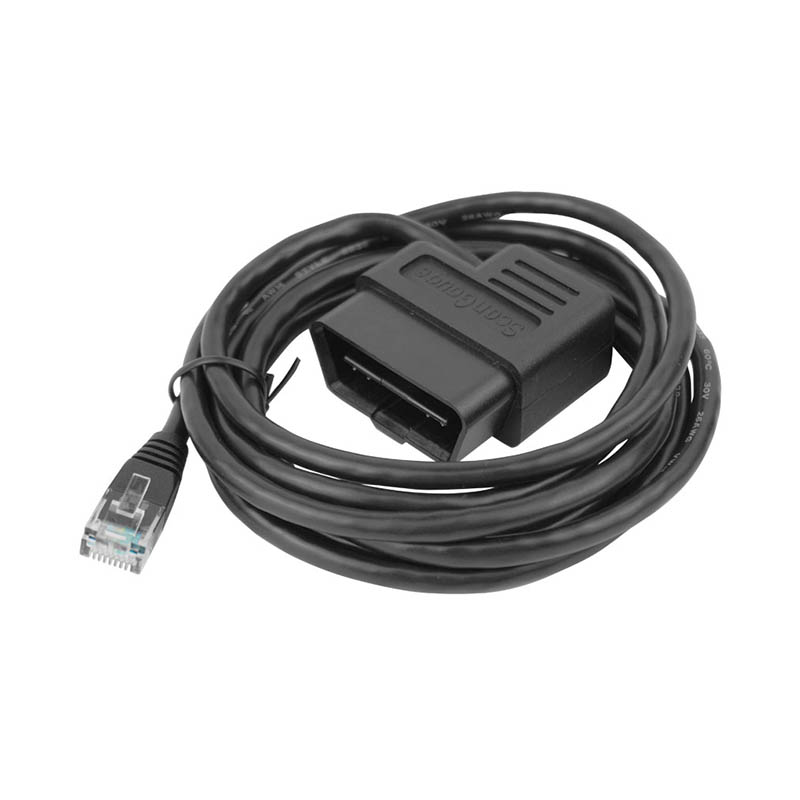
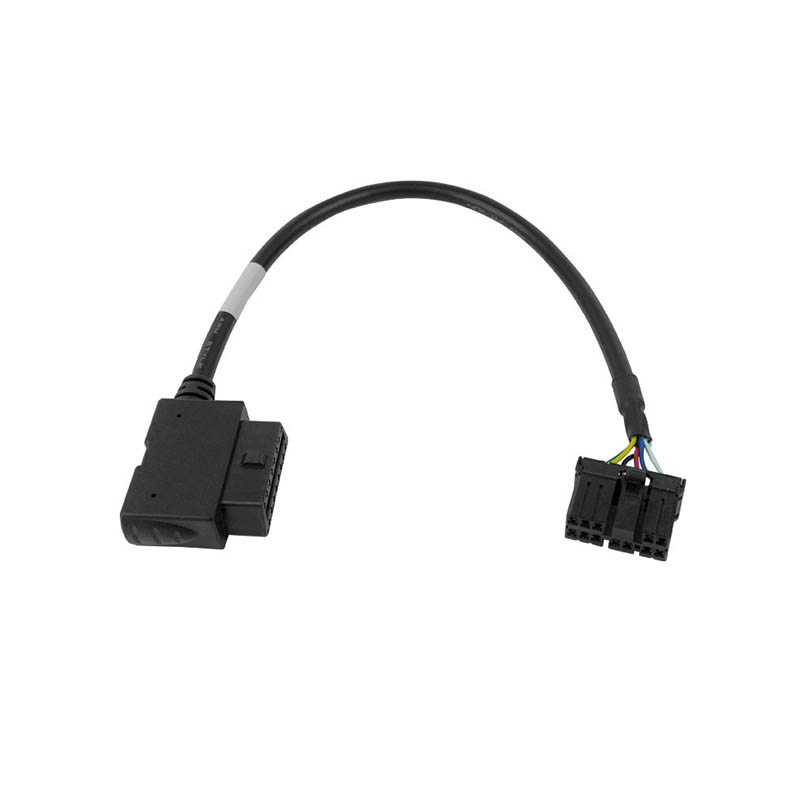
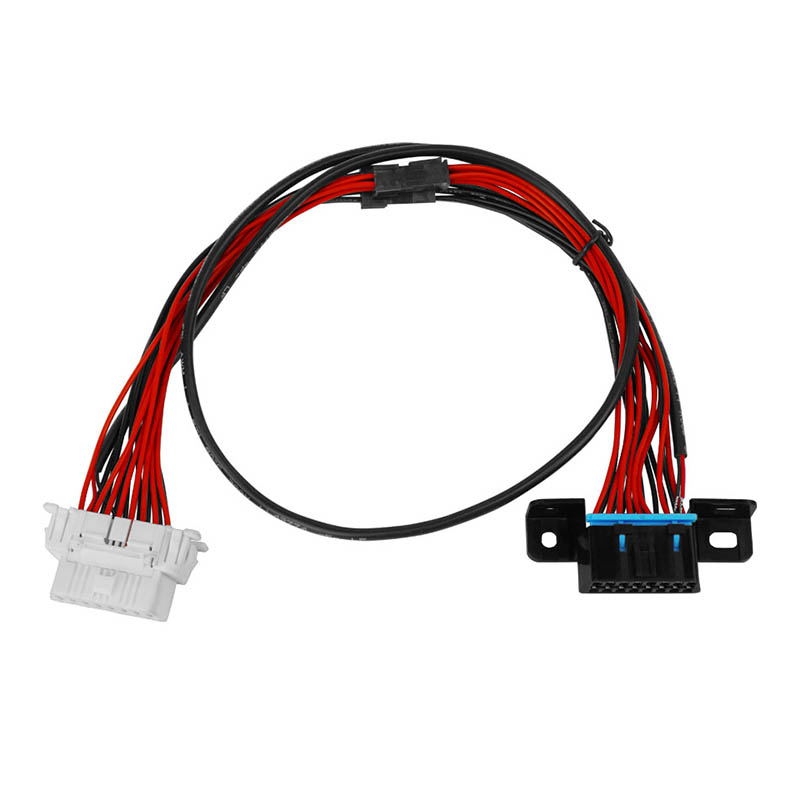
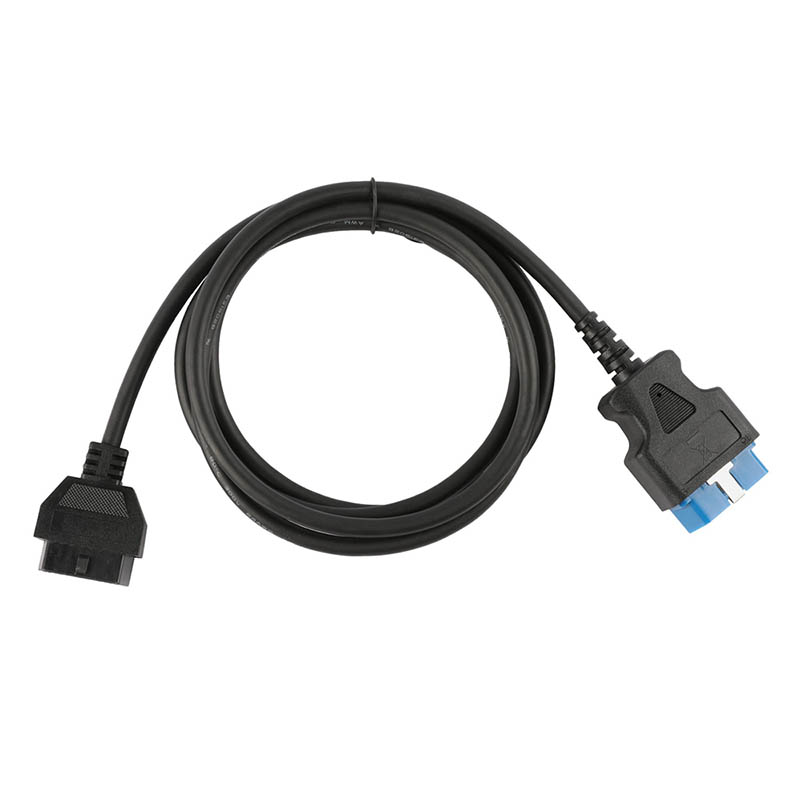
The 16-pin connectors at both ends of the OBD connection cable are critical nodes for signal continuity. Inferior connectors often suffer from high contact resistance or loose connections due to thin plating, poor elasticity, or large tolerances. High-end products use phosphor bronze terminals with a thick gold plating, ensuring excellent conductivity while also being resistant to oxidation and wear. Simultaneously, the outer shell is made of high-strength engineering plastic, using precise injection molding to ensure a perfect fit between the plug and the vehicle's OBD socket, preventing poor contact due to vibration. Some industrial-grade cables also feature locking clips or anti-dislodgement clips to further enhance connection stability.
4. Built-in Protection Circuit: Preventing Reverse Connection and Surge Damage
Vehicle power fluctuations, electrostatic discharge, or diagnostic equipment malfunctions can inject overvoltage or reverse current into the OBD interface, damaging sensitive ECU chips. Therefore, professional OBD connection cables often integrate TVS transient voltage suppression diodes, resettable fuses, and ESD protection devices. These components can clamp abnormal voltages and cut off fault currents within nanoseconds, protecting the vehicle's electronic systems and preventing communication interruptions due to equipment damage. This "invisible protection," though unseen, is crucial for long-term stable operation.
OBD connection cables are truly the culmination of materials science, electromagnetic compatibility design, and precision manufacturing processes. They don't generate data, yet they determine the reliability of that data; they don't diagnose faults, yet they influence the accuracy of those diagnoses. In the era of intelligent connected vehicles, where every CAN message is crucial to safety and efficiency, ensuring signal integrity is no longer a "bonus," but a fundamental requirement that OBD connection cables must uphold. Only in this way can every plug-in/plug-out become a trustworthy dialogue.
1. High-purity conductors and precise impedance matching: Ensuring low-loss signal transmission
OBD systems primarily rely on the CAN bus for communication, with a standard requirement of a transmission rate of 500 kbps. To maintain undistorted high-speed signal waveforms, the connection cable must use high-purity oxygen-free copper or multi-strand tin-plated copper cores as conductors to reduce signal attenuation caused by resistance and skin effect. More importantly, the cable must achieve strict characteristic impedance control, ensuring consistent impedance throughout the entire line through precise design of conductor spacing, dielectric constant of insulation materials, and shielding structure. Any impedance change will cause signal reflection, resulting in "ringing" or "overshoot," which the ECU may then misinterpret as a communication error.
2. Fully Shielded Structure: Resisting Electromagnetic Interference
The vehicle interior is a typical strong electromagnetic environment—ignition systems, motors, high-voltage wiring harnesses, etc., all generate broadband electromagnetic noise. If the OBD connection cable lacks effective shielding, external interference can easily couple into the signal lines, leading to increased common-mode noise in the CAN_H/CAN_L differential signals and a decreased signal-to-noise ratio. High-quality OBD cables generally employ a double-layer shielding design: the inner layer of aluminum foil wraps each pair of signal lines to suppress crosstalk; the outer layer of braided copper mesh completely wraps the cable, effectively shielding against external radiation. With proper grounding at both ends of the shielding layer, interference current can be diverted into the vehicle body, ensuring a pure and stable differential signal, maintaining reliable communication even during high engine speeds or the start-stop of high-power electrical appliances.
3. Precision Connectors and Reliable Contact: Preventing Physical Layer Failure
The 16-pin connectors at both ends of the OBD connection cable are critical nodes for signal continuity. Inferior connectors often suffer from high contact resistance or loose connections due to thin plating, poor elasticity, or large tolerances. High-end products use phosphor bronze terminals with a thick gold plating, ensuring excellent conductivity while also being resistant to oxidation and wear. Simultaneously, the outer shell is made of high-strength engineering plastic, using precise injection molding to ensure a perfect fit between the plug and the vehicle's OBD socket, preventing poor contact due to vibration. Some industrial-grade cables also feature locking clips or anti-dislodgement clips to further enhance connection stability.
4. Built-in Protection Circuit: Preventing Reverse Connection and Surge Damage
Vehicle power fluctuations, electrostatic discharge, or diagnostic equipment malfunctions can inject overvoltage or reverse current into the OBD interface, damaging sensitive ECU chips. Therefore, professional OBD connection cables often integrate TVS transient voltage suppression diodes, resettable fuses, and ESD protection devices. These components can clamp abnormal voltages and cut off fault currents within nanoseconds, protecting the vehicle's electronic systems and preventing communication interruptions due to equipment damage. This "invisible protection," though unseen, is crucial for long-term stable operation.
OBD connection cables are truly the culmination of materials science, electromagnetic compatibility design, and precision manufacturing processes. They don't generate data, yet they determine the reliability of that data; they don't diagnose faults, yet they influence the accuracy of those diagnoses. In the era of intelligent connected vehicles, where every CAN message is crucial to safety and efficiency, ensuring signal integrity is no longer a "bonus," but a fundamental requirement that OBD connection cables must uphold. Only in this way can every plug-in/plug-out become a trustworthy dialogue.