


How Does the OBD Cable Become the Data Transmission Lifeline of a Car's "Health Steward"?
Release Time : 2025-11-26
In today's era of rapid development in intelligent vehicles and vehicle-to-everything (V2X) technology, vehicles are no longer simply means of transportation, but rather "mobile intelligent terminals" integrating complex electronic systems. Within this vast system, OBD (On-Board Diagnostics) plays a crucial role—acting as the car's "health steward," it monitors the real-time operating status of core components such as the engine, transmission, and emissions system. The seemingly ordinary cable connecting diagnostic equipment to the vehicle's OBD interface is precisely the data transmission lifeline of this health management system. Without it, even the most advanced diagnostic tools cannot "understand" the car's language.
1. OBD Cable: The Bridge Between the Vehicle and the Outside World
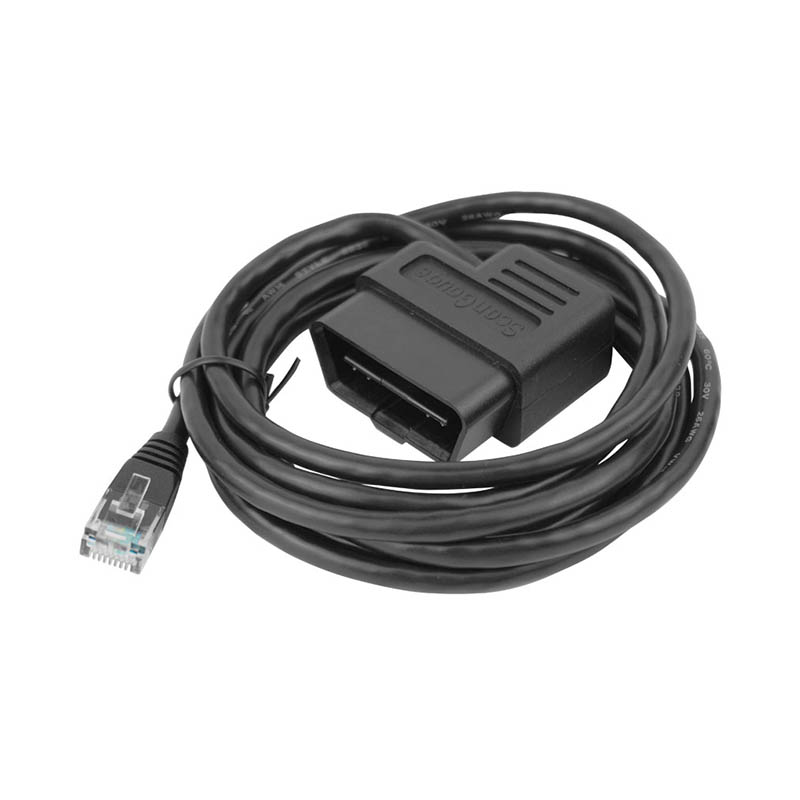
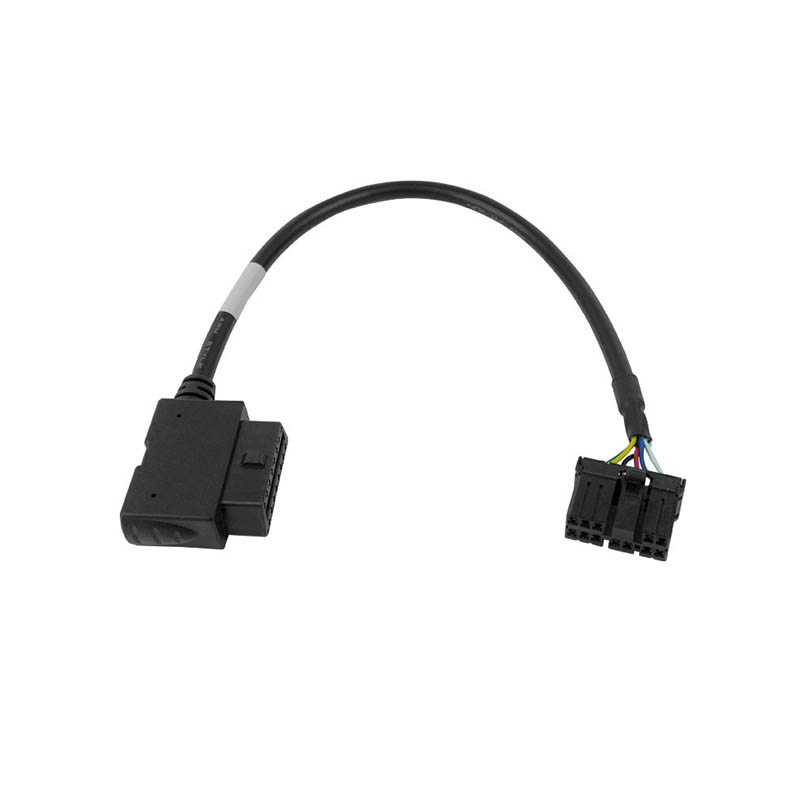
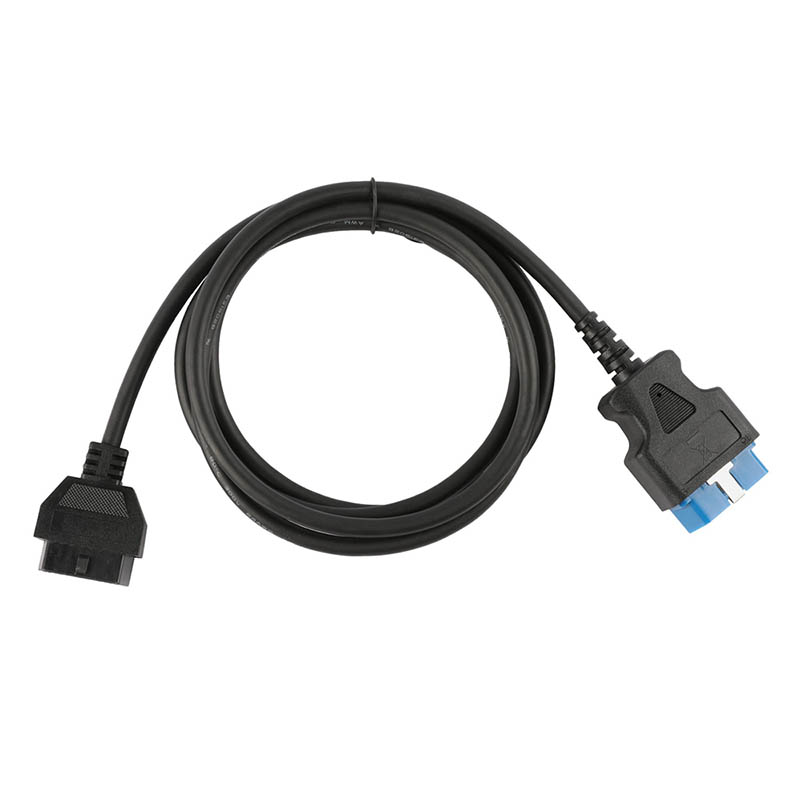
Since its inception in the 1980s, the OBD system has undergone a standardized evolution from OBD-I to OBD-II. Today, the vast majority of passenger vehicles worldwide are equipped with a standardized 16-pin OBD-II interface, typically located near the dashboard below the driver's seat. One end of the OBD cable is inserted into the interface, and the other end connects to a diagnostic tool, computer, mobile phone, or remote monitoring terminal to achieve two-way data communication. Through this cable, technicians can read fault codes, view real-time sensor data, clear warning lights, and even perform ECU programming or remapping. More importantly, the OBD cable is not only a repair tool but also a window for car owners to understand their vehicle's status. With the help of a Bluetooth or Wi-Fi OBD adapter and a mobile app, ordinary users can also monitor information such as fuel consumption, mileage, and battery voltage at any time, enabling preventative maintenance and preventing minor problems from escalating into major malfunctions.
2. High-Performance Cables Ensure Accurate and Reliable Data
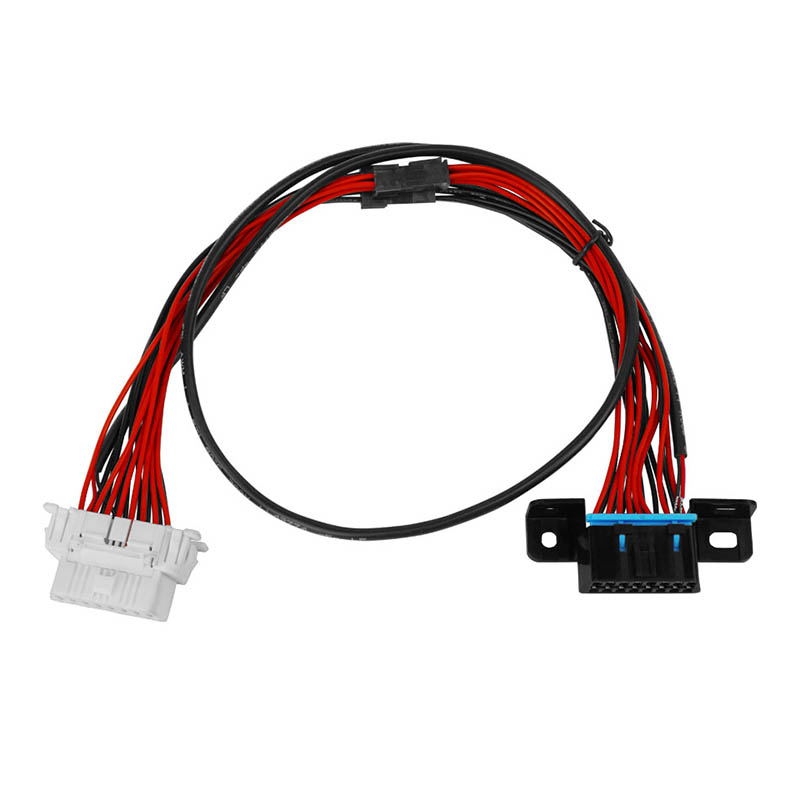
Despite its simple appearance, a high-quality OBD cable has a very sophisticated internal structure. It integrates multi-core shielded wires. The CAN bus, as the mainstream communication standard in modern automobiles, has extremely high requirements for signal integrity—any interference, delay, or poor contact can lead to data misreading or even communication interruption. OBD cables generally use gold-plated connectors, double-layer shielding, and highly flexible outer sheaths. Some industrial-grade products also have overvoltage protection, short-circuit protection, and wide-temperature range operation capabilities to ensure stable data transmission even in extreme environments. Inferior cables may suffer from poor contact and protocol compatibility due to substandard materials, leading to false alarms or even damage to the vehicle's ECU.
3. Expanding Application Scenarios, Empowering Smart Mobility
With the development of the automotive aftermarket and intelligent connected vehicle technologies, the application of OBD cables has long since transcended traditional repair. In fleet management, companies use OBD devices to monitor vehicle location, driving behavior, and mechanical status in real time, optimizing scheduling and reducing operational risks. In the insurance sector, the "UBI" model relies on OBD data to assess driving habits and achieve personalized premium pricing. In the new energy vehicle sector, the OBD interface can also read key parameters such as battery SOC and motor temperature, providing a basis for safe operation and maintenance. Furthermore, in professional scenarios such as automotive R&D, emissions testing, and used car appraisal, OBD cables are also indispensable data collection tools. They can be considered the "neural synapse" connecting the physical vehicle and the digital world, allowing the car to truly "speak."
Although small, the OBD cable is an indispensable key component in the modern automotive diagnostics and intelligent ecosystem. It not only carries the flow of vehicle health data but also drives the transformation of the automotive aftermarket towards digital, precise, and preventative services. In the future era of "software-defined vehicles," this data transmission lifeline will continue to safeguard the safe and efficient operation of every car.
1. OBD Cable: The Bridge Between the Vehicle and the Outside World
Since its inception in the 1980s, the OBD system has undergone a standardized evolution from OBD-I to OBD-II. Today, the vast majority of passenger vehicles worldwide are equipped with a standardized 16-pin OBD-II interface, typically located near the dashboard below the driver's seat. One end of the OBD cable is inserted into the interface, and the other end connects to a diagnostic tool, computer, mobile phone, or remote monitoring terminal to achieve two-way data communication. Through this cable, technicians can read fault codes, view real-time sensor data, clear warning lights, and even perform ECU programming or remapping. More importantly, the OBD cable is not only a repair tool but also a window for car owners to understand their vehicle's status. With the help of a Bluetooth or Wi-Fi OBD adapter and a mobile app, ordinary users can also monitor information such as fuel consumption, mileage, and battery voltage at any time, enabling preventative maintenance and preventing minor problems from escalating into major malfunctions.
2. High-Performance Cables Ensure Accurate and Reliable Data
Despite its simple appearance, a high-quality OBD cable has a very sophisticated internal structure. It integrates multi-core shielded wires. The CAN bus, as the mainstream communication standard in modern automobiles, has extremely high requirements for signal integrity—any interference, delay, or poor contact can lead to data misreading or even communication interruption. OBD cables generally use gold-plated connectors, double-layer shielding, and highly flexible outer sheaths. Some industrial-grade products also have overvoltage protection, short-circuit protection, and wide-temperature range operation capabilities to ensure stable data transmission even in extreme environments. Inferior cables may suffer from poor contact and protocol compatibility due to substandard materials, leading to false alarms or even damage to the vehicle's ECU.
3. Expanding Application Scenarios, Empowering Smart Mobility
With the development of the automotive aftermarket and intelligent connected vehicle technologies, the application of OBD cables has long since transcended traditional repair. In fleet management, companies use OBD devices to monitor vehicle location, driving behavior, and mechanical status in real time, optimizing scheduling and reducing operational risks. In the insurance sector, the "UBI" model relies on OBD data to assess driving habits and achieve personalized premium pricing. In the new energy vehicle sector, the OBD interface can also read key parameters such as battery SOC and motor temperature, providing a basis for safe operation and maintenance. Furthermore, in professional scenarios such as automotive R&D, emissions testing, and used car appraisal, OBD cables are also indispensable data collection tools. They can be considered the "neural synapse" connecting the physical vehicle and the digital world, allowing the car to truly "speak."
Although small, the OBD cable is an indispensable key component in the modern automotive diagnostics and intelligent ecosystem. It not only carries the flow of vehicle health data but also drives the transformation of the automotive aftermarket towards digital, precise, and preventative services. In the future era of "software-defined vehicles," this data transmission lifeline will continue to safeguard the safe and efficient operation of every car.