


Are OBD cables truly compatible with all car models?
Release Time : 2025-12-19
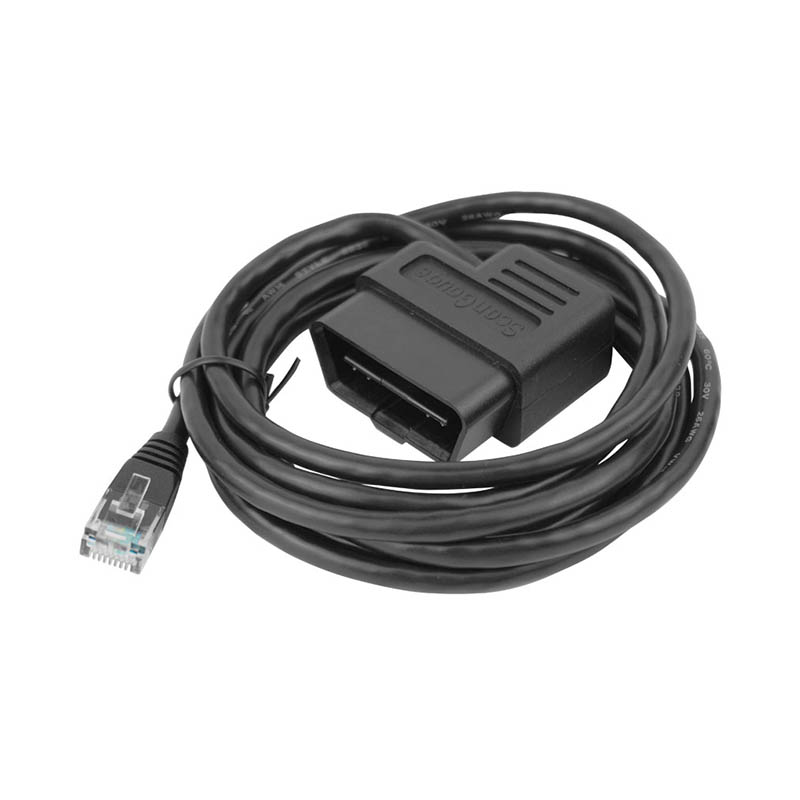
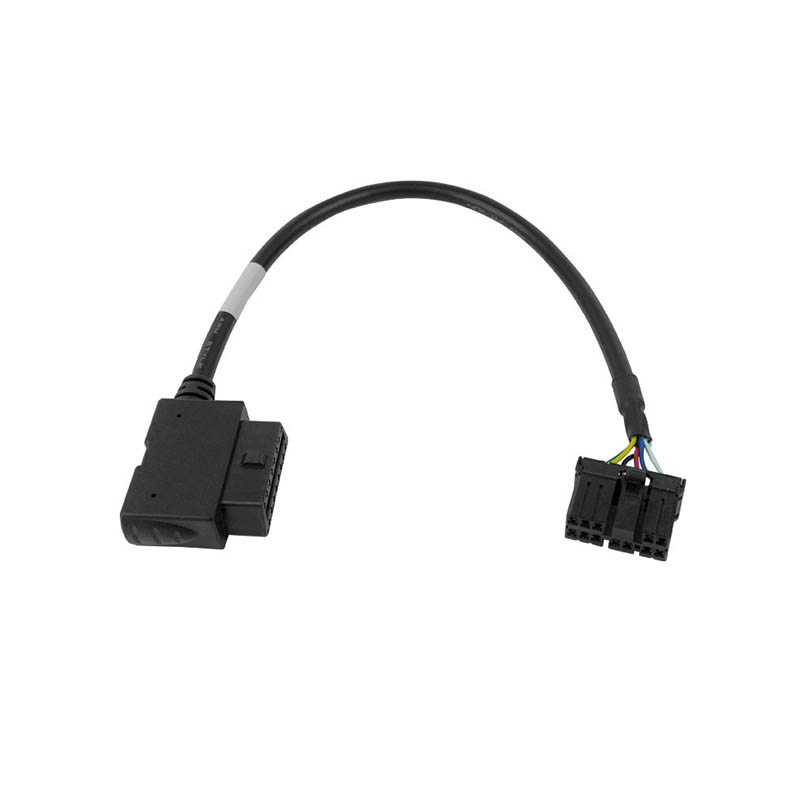
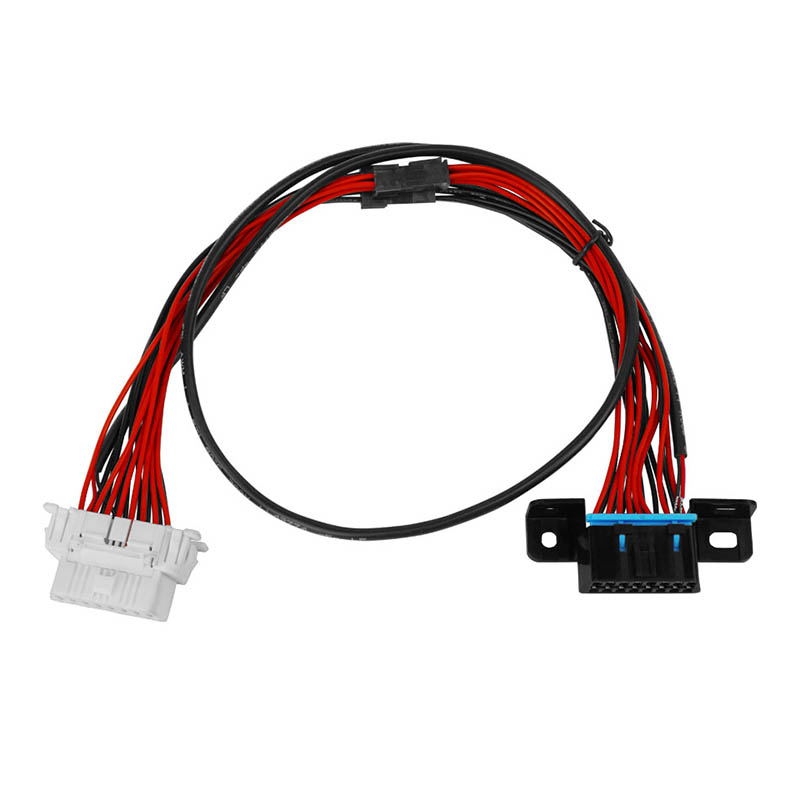
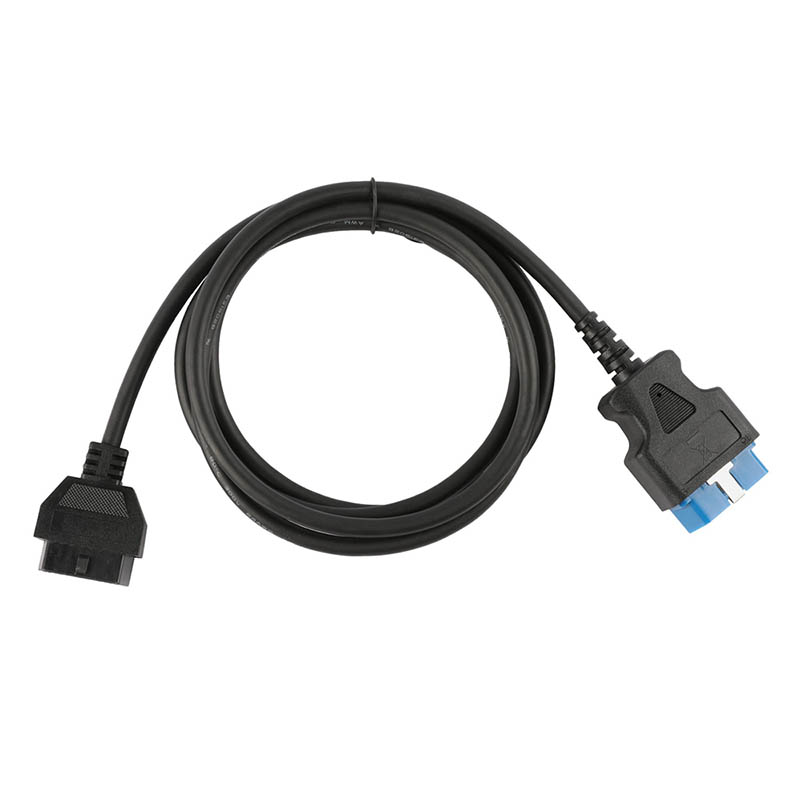
In today's increasingly prevalent automotive electronic diagnostics landscape, OBD cables, as the bridge connecting vehicles and diagnostic equipment, have become an indispensable tool for repair technicians, car enthusiasts, and even ordinary car owners. Especially those OBD cables labeled "22-pin to 16-pin," often touted as a universal solution suitable for various brands and eras of vehicles. However, this seemingly all-encompassing adapter cable is far more complex in practice than simply "plug and play." True compatibility hinges on precise adaptation to the communication protocols, pin definitions, and electrical characteristics of different manufacturers.
While the OBD-II standard globally standardized the physical form of the 16-pin diagnostic interface and defined the functions of some signal pins, it did not mandate that all manufacturers use the exact same communication protocol or activate all pins. For example, some early European models used a 22-pin circular diagnostic interface, whose internal pin layout, power supply method, and even signal levels differed from the standard OBD-II. A qualified 22-pin to 16-pin cable not only needs to physically convert the connectors, but also requires intelligent mapping of internal circuitry to accurately map key signals from the original 22-pin interface (such as K-line, L-line, CAN high/low, power and ground) to the standard positions of the OBD-II 16-pin connector. Simply connecting directly without logical matching can lead to anything from the diagnostic tool failing to recognize the vehicle to potentially damaging the onboard computer or external devices due to voltage conflicts.
Furthermore, different brands have significantly different usage habits for diagnostic interfaces. Some German cars use the 22-pin interface for dedicated diagnostic systems; while their communication protocol is compatible with basic OBD-II functions, advanced functions (such as transmission tuning and airbag reset) still require original manufacturer protocol support. Some American or Asian models, while using 16-pin interfaces, may shield some pins or use non-standard power supply logic. Therefore, truly reliable OBD conversion cables often have built-in protection circuits, such as overvoltage clamping, electrostatic discharge protection, and signal isolation modules, to address electrical differences between different car models and ensure stable and safe data transmission.
Manufacturing processes also affect long-term reliability. Frequent plugging and unplugging, the high temperature and humidity environment inside the vehicle, and vibration and shock place stringent requirements on the strength of the cable's solder joints, the integrity of the shielding layer, and the durability of the outer shell. High-quality products typically use multi-layered braided shielding to suppress electromagnetic interference and prevent noise pollution from the engine ignition system or onboard electronic devices to diagnostic signals; at the same time, the metal contacts of the connectors need to be gold-plated to ensure low contact resistance and oxidation resistance, avoiding communication interruptions due to oxidation.
More importantly, users need to understand that the cable itself is only a physical channel; true "compatibility" depends on the software support of the diagnostic equipment. Even if the cable perfectly converts all signals, if the diagnostic tool does not support the protocol stack of the target vehicle model, it still cannot read fault codes or perform operations. Therefore, so-called "universality" is actually the result of the combined effect of the cable hardware adaptability and the diagnostic software protocol library.
In conclusion, whether an OBD cable can truly be compatible with all vehicle models is not determined by the number of interfaces, but by whether its internal circuit design respects the technical specifications of each manufacturer and whether it has sufficient electrical protection and signal fidelity capabilities. In today's increasingly complex automotive electronics landscape, choosing a fully validated OBD converter cable with clearly defined compatibility is not just a matter of efficiency, but also a reflection of responsibility for the safety of the vehicle's electronic systems. This seemingly ordinary cable is actually a delicate link connecting the "nervous system" of the driver and the vehicle—only precision and reliability can live up to that trust.
While the OBD-II standard globally standardized the physical form of the 16-pin diagnostic interface and defined the functions of some signal pins, it did not mandate that all manufacturers use the exact same communication protocol or activate all pins. For example, some early European models used a 22-pin circular diagnostic interface, whose internal pin layout, power supply method, and even signal levels differed from the standard OBD-II. A qualified 22-pin to 16-pin cable not only needs to physically convert the connectors, but also requires intelligent mapping of internal circuitry to accurately map key signals from the original 22-pin interface (such as K-line, L-line, CAN high/low, power and ground) to the standard positions of the OBD-II 16-pin connector. Simply connecting directly without logical matching can lead to anything from the diagnostic tool failing to recognize the vehicle to potentially damaging the onboard computer or external devices due to voltage conflicts.
Furthermore, different brands have significantly different usage habits for diagnostic interfaces. Some German cars use the 22-pin interface for dedicated diagnostic systems; while their communication protocol is compatible with basic OBD-II functions, advanced functions (such as transmission tuning and airbag reset) still require original manufacturer protocol support. Some American or Asian models, while using 16-pin interfaces, may shield some pins or use non-standard power supply logic. Therefore, truly reliable OBD conversion cables often have built-in protection circuits, such as overvoltage clamping, electrostatic discharge protection, and signal isolation modules, to address electrical differences between different car models and ensure stable and safe data transmission.
Manufacturing processes also affect long-term reliability. Frequent plugging and unplugging, the high temperature and humidity environment inside the vehicle, and vibration and shock place stringent requirements on the strength of the cable's solder joints, the integrity of the shielding layer, and the durability of the outer shell. High-quality products typically use multi-layered braided shielding to suppress electromagnetic interference and prevent noise pollution from the engine ignition system or onboard electronic devices to diagnostic signals; at the same time, the metal contacts of the connectors need to be gold-plated to ensure low contact resistance and oxidation resistance, avoiding communication interruptions due to oxidation.
More importantly, users need to understand that the cable itself is only a physical channel; true "compatibility" depends on the software support of the diagnostic equipment. Even if the cable perfectly converts all signals, if the diagnostic tool does not support the protocol stack of the target vehicle model, it still cannot read fault codes or perform operations. Therefore, so-called "universality" is actually the result of the combined effect of the cable hardware adaptability and the diagnostic software protocol library.
In conclusion, whether an OBD cable can truly be compatible with all vehicle models is not determined by the number of interfaces, but by whether its internal circuit design respects the technical specifications of each manufacturer and whether it has sufficient electrical protection and signal fidelity capabilities. In today's increasingly complex automotive electronics landscape, choosing a fully validated OBD converter cable with clearly defined compatibility is not just a matter of efficiency, but also a reflection of responsibility for the safety of the vehicle's electronic systems. This seemingly ordinary cable is actually a delicate link connecting the "nervous system" of the driver and the vehicle—only precision and reliability can live up to that trust.