


What are the mechanisms by which Tesla wiring harnesses ensure data transmission rate and reliability in autonomous driving scenarios?
Release Time : 2026-04-27
Tesla's wiring harness plays a crucial role in data transmission during autonomous driving scenarios. Its design must balance high speed, low latency, and high reliability to support real-time interaction between sensors such as cameras and radar and the central computing unit. Traditional automotive wiring harnesses, limited by bandwidth, cannot meet the demands of autonomous driving. Tesla has restructured its wiring harness architecture through technological innovation, creating a multi-layered data transmission assurance system.
Tesla's Autopilot system relies on a multimodal sensor network, including multiple high-resolution cameras, millimeter-wave radar, and ultrasonic sensors. These devices generate massive amounts of data per second, which must be transmitted in real-time via the wiring harness to the FSD chip for processing. For example, image data captured by cameras needs to be quickly converted into 3D spatial information to support path planning and decision-making. If the wiring harness transmission is delayed or packet loss occurs, it may lead to misjudgments of road conditions by the system, causing safety risks. Therefore, the primary task of Tesla's wiring harness is to ensure the immediacy and integrity of data transmission.
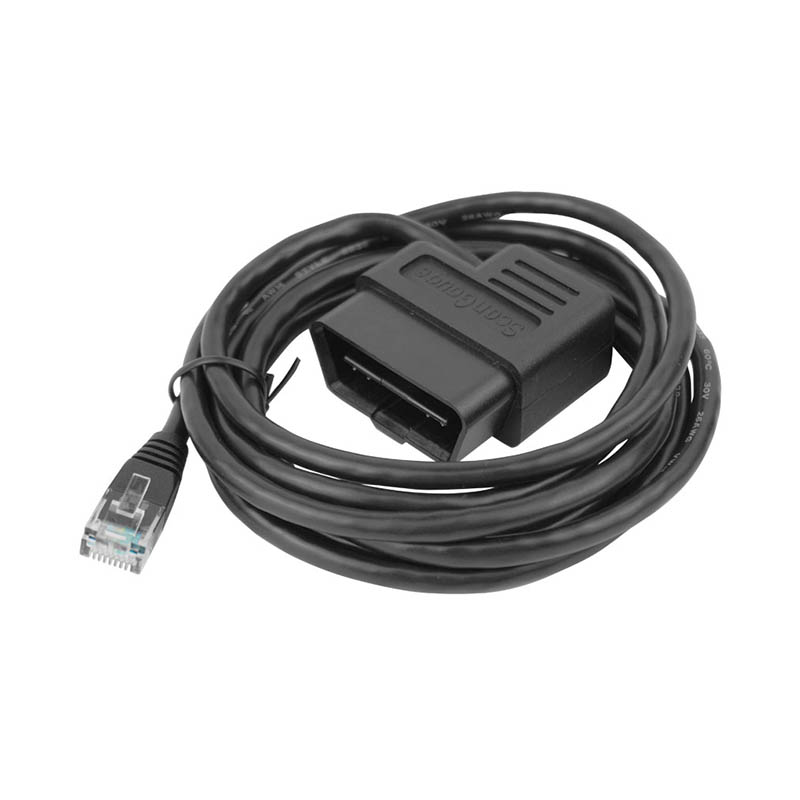
To achieve high-speed transmission, Tesla uses automotive Ethernet instead of the traditional CAN bus. Automotive Ethernet is based on a single pair of unshielded twisted-pair cables, supports high-bandwidth transmission, and is less expensive than LVDS solutions. This design allows for concurrent transmission of data from multiple cameras, avoiding latency caused by bus contention. Meanwhile, Tesla transmits some critical signals (such as chassis control commands) via high-speed CAN-FD, balancing real-time performance and reliability. The dual-protocol parallel strategy satisfies the high throughput requirements of sensor data while ensuring low-latency execution of control commands.
The physical layer design of the Tesla wiring harness emphasizes interference resistance and durability. In autonomous driving scenarios, vehicles need to cope with complex electromagnetic environments, requiring the wiring harness to have shielding properties to prevent data distortion. Tesla uses customized cables, wrapped with self-winding braided protective sleeves or corrugated tubing, improving flexibility and enhancing vibration and wear resistance. For high-temperature components (such as around the motor), the wiring harness uses oil-resistant and high-temperature-resistant materials and secures the copper lug structure with through-hole bolts to ensure long-term stable connections. These designs reduce the risk of data transmission interruptions due to environmental factors.
The domain-centralized architecture is another key optimization of the Tesla wiring harness. By integrating distributed ECUs into a central computing platform and domain controller, Tesla significantly reduces the length of the wiring harness and the number of interfaces. For example, the total length of the Model Y wiring harness is shorter than that of traditional models, reducing weight and lowering the probability of poor contact. Data interaction between domain controllers is accomplished via a high-speed bus, while actuators (such as lights and motors) are connected via a local network, forming a hierarchical transmission structure. This architecture simplifies the data flow path and improves the overall system reliability.
Tesla also enhances the wiring harness's fault tolerance through redundant design. Autonomous driving requires a "fail-safe" mechanism, meaning a single point of failure should not lead to system failure. The Tesla wiring harness deploys dual-channel transmission on critical paths (such as steering and braking control), automatically switching to the backup channel in case of a primary channel failure. Furthermore, the wiring harness layout avoids excessive bending and crossing, reducing the risk of signal interference and mechanical damage. These measures ensure the continuity of data transmission under extreme operating conditions.
Software-level optimization is equally important. Tesla continuously improves its wiring harness management strategy through OTA updates. For example, it dynamically adjusts data priorities to ensure emergency control commands are transmitted first; and optimizes data compression algorithms to reduce transmission load. Simultaneously, the system monitors the wiring harness status in real time, issuing warnings of potential faults through current and voltage anomalies, triggering maintenance procedures in advance. This "hardware-software collaboration" model gives the Tesla wiring harness adaptive capabilities, enabling it to meet the needs of different driving scenarios.
Tesla's breakthrough in wiring harness technology has propelled the commercialization of autonomous driving. Its high-speed, reliable data transmission capabilities support the stable operation of the Full Self-Driving (FSD) system in complex road conditions. With the advancement of Level 4 autonomous driving, Tesla is exploring all-optical wiring harnesses and integrated modules to further enhance bandwidth and integration. In the future, wiring harnesses will not only be data channels but may also become an extension of intelligent perception and decision-making, providing stronger underlying support for autonomous driving.