


How does the OBDII cable for Toyota improve the efficiency and accuracy of vehicle diagnostics?
Release Time : 2026-03-26
With the increasing electronic sophistication of automobiles, vehicles integrate numerous control units and sensor systems. Traditional diagnostic methods relying on manual experience are no longer sufficient to meet the demands for efficiency and accuracy. The OBDII cable for Toyota, as a crucial interface tool connecting vehicles and diagnostic equipment, significantly improves the efficiency and accuracy of vehicle diagnostics through standardized data transmission, becoming a key element in modern automotive repair and management.
1. Standardized Interface: Enabling Rapid Connection and Universal Diagnostics
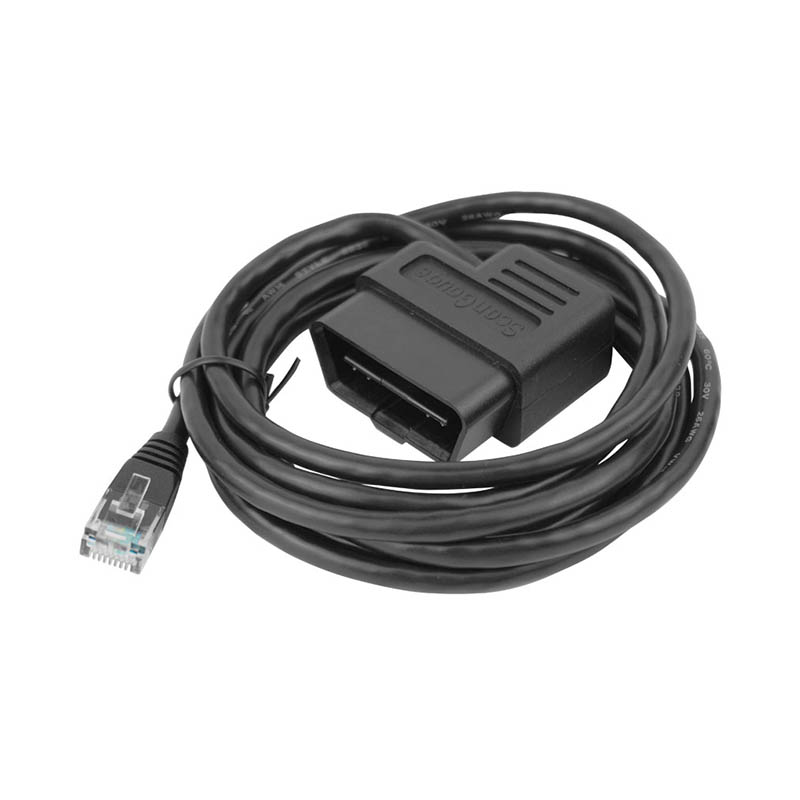
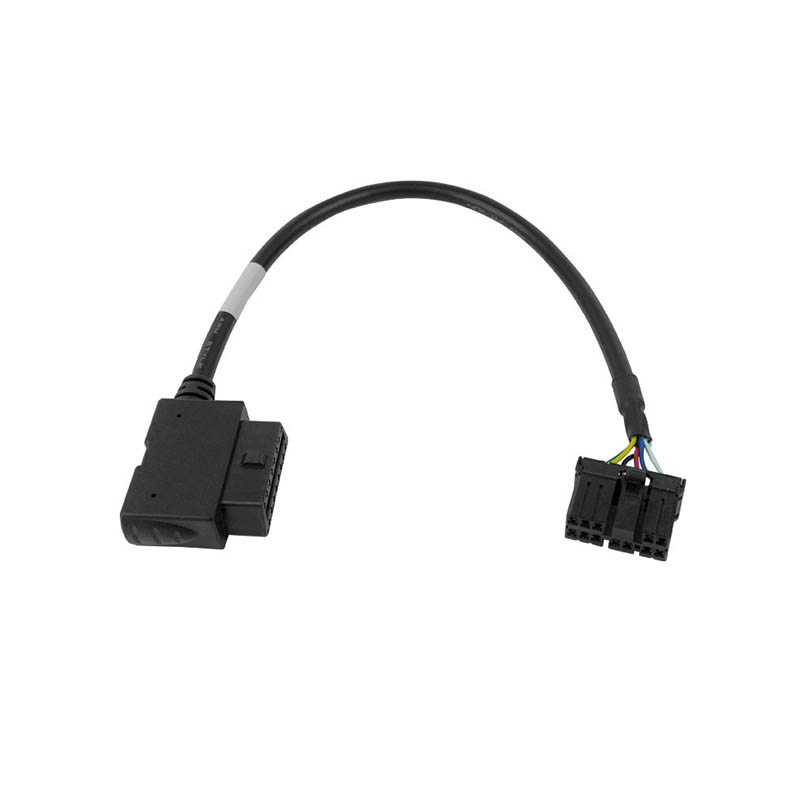
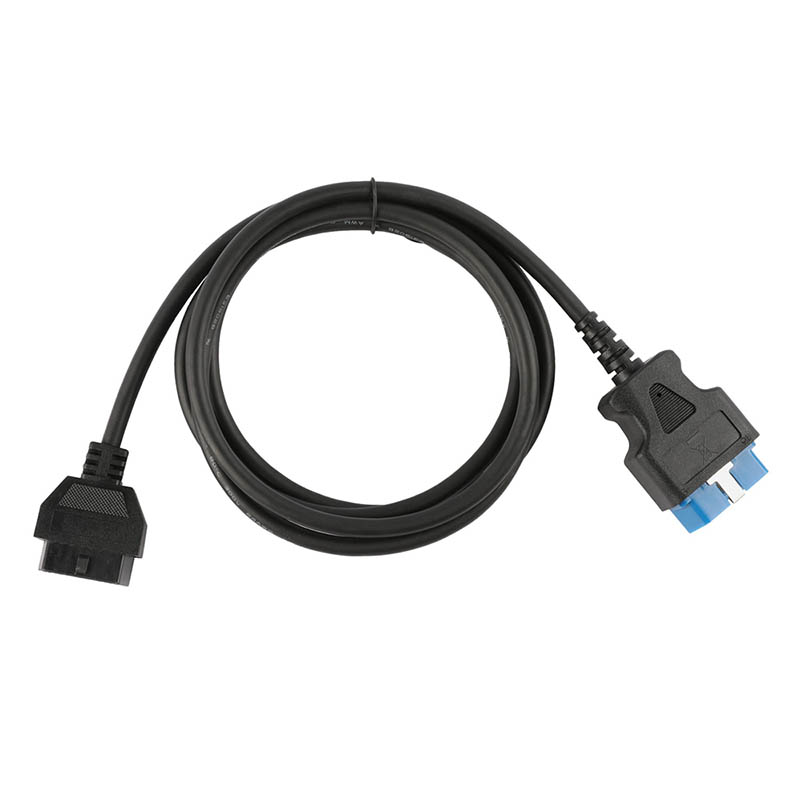
The OBDII system uses a unified interface standard, ensuring compatibility across different brands and vehicle models at the basic diagnostic level. With the OBDII cable for Toyota, technicians can quickly connect to the vehicle system without complex disassembly, directly reading fault information and operational data. This "plug-and-play" approach greatly shortens preparation time and improves overall work efficiency, making it particularly suitable for high-frequency operation scenarios such as repair shops and inspection stations.
2. Real-time Data Reading: Improved Detection Accuracy
The OBDII cable for Toyota not only reads fault codes but also acquires key parameters such as engine speed, intake air volume, and oxygen sensor data in real time. This data is presented digitally, avoiding errors caused by human judgment and enabling technicians to analyze the vehicle's operating status more accurately. By comparing normal ranges with actual data, the root cause of the problem can be quickly located, reducing misdiagnosis and repeated testing.
3. Fault Code Parsing: Quickly Locate the Problem Area
When a vehicle malfunctions, it records fault codes through the electronic control unit. The OBDII cable for Toyota transmits this information to diagnostic equipment, which automatically parses it, directly pointing to potentially problematic components or systems. Compared to traditional item-by-item troubleshooting, this "precise location" mechanism significantly shortens fault diagnosis time and improves repair efficiency.
4. Data Recording and Analysis: Supports Long-Term Monitoring
In addition to immediate detection, the OBDII cable for Toyota can also be used with software to record data, enabling long-term tracking of the vehicle's operating status. This is particularly important for detecting intermittent faults or performance degradation trends. By comparing and analyzing data, technicians can anticipate potential problems and perform preventative maintenance, further improving the scientific rigor and accuracy of testing.
5. Reduced Human Intervention: Enhanced Testing Consistency
Traditional testing methods often rely on technician experience, which can lead to discrepancies in judgment among different personnel. However, data-driven testing using the OBDII cable for Toyota transforms judgment criteria into objective data, reducing human error. This achieves higher consistency and standardization in both repair shops and testing institutions.
6. Improved Overall Efficiency: Adapting to Modern Repair Needs
In practical applications, the OBDII cable for Toyota is not only used for fault detection but also widely applied in vehicle tuning, performance monitoring, and emissions testing. Its efficient data transmission capabilities allow multiple testing items to be completed under the same connection, reducing repetitive steps. This integrated testing approach makes the overall workflow more compact and efficient.
Overall, the OBDII cable for Toyota, through standardized interfaces, real-time data acquisition, intelligent fault analysis, and data-driven analysis, transforms automotive testing from experience-based to data-driven. It not only significantly improves detection efficiency but also greatly enhances diagnostic accuracy, providing reliable support for modern vehicle maintenance.
1. Standardized Interface: Enabling Rapid Connection and Universal Diagnostics
The OBDII system uses a unified interface standard, ensuring compatibility across different brands and vehicle models at the basic diagnostic level. With the OBDII cable for Toyota, technicians can quickly connect to the vehicle system without complex disassembly, directly reading fault information and operational data. This "plug-and-play" approach greatly shortens preparation time and improves overall work efficiency, making it particularly suitable for high-frequency operation scenarios such as repair shops and inspection stations.
2. Real-time Data Reading: Improved Detection Accuracy
The OBDII cable for Toyota not only reads fault codes but also acquires key parameters such as engine speed, intake air volume, and oxygen sensor data in real time. This data is presented digitally, avoiding errors caused by human judgment and enabling technicians to analyze the vehicle's operating status more accurately. By comparing normal ranges with actual data, the root cause of the problem can be quickly located, reducing misdiagnosis and repeated testing.
3. Fault Code Parsing: Quickly Locate the Problem Area
When a vehicle malfunctions, it records fault codes through the electronic control unit. The OBDII cable for Toyota transmits this information to diagnostic equipment, which automatically parses it, directly pointing to potentially problematic components or systems. Compared to traditional item-by-item troubleshooting, this "precise location" mechanism significantly shortens fault diagnosis time and improves repair efficiency.
4. Data Recording and Analysis: Supports Long-Term Monitoring
In addition to immediate detection, the OBDII cable for Toyota can also be used with software to record data, enabling long-term tracking of the vehicle's operating status. This is particularly important for detecting intermittent faults or performance degradation trends. By comparing and analyzing data, technicians can anticipate potential problems and perform preventative maintenance, further improving the scientific rigor and accuracy of testing.
5. Reduced Human Intervention: Enhanced Testing Consistency
Traditional testing methods often rely on technician experience, which can lead to discrepancies in judgment among different personnel. However, data-driven testing using the OBDII cable for Toyota transforms judgment criteria into objective data, reducing human error. This achieves higher consistency and standardization in both repair shops and testing institutions.
6. Improved Overall Efficiency: Adapting to Modern Repair Needs
In practical applications, the OBDII cable for Toyota is not only used for fault detection but also widely applied in vehicle tuning, performance monitoring, and emissions testing. Its efficient data transmission capabilities allow multiple testing items to be completed under the same connection, reducing repetitive steps. This integrated testing approach makes the overall workflow more compact and efficient.
Overall, the OBDII cable for Toyota, through standardized interfaces, real-time data acquisition, intelligent fault analysis, and data-driven analysis, transforms automotive testing from experience-based to data-driven. It not only significantly improves detection efficiency but also greatly enhances diagnostic accuracy, providing reliable support for modern vehicle maintenance.